The internet landscape has drastically changed in 2026. Social media sites are now fiercely competitive online marketplaces rather than merely venues for informal communication. Sustaining a steady online presence is crucial for
digital marketers, entrepreneurs, and creators. However, coming up with original content ideas, crafting captivating captions, and creating eye-catching images on a daily basis can soon result in creative exhaustion. Artificial Intelligence (AI) is a game-changer in this situation.
AI-powered social media content generation is now essential for effective digital growth, not just a futuristic idea. When applied properly, AI serves as a potent helper that expedites your workflow and expands your brand rather than taking the place of human innovation. This thorough tutorial will show you how novices can use AI tools to produce excellent social media content right now.
The Development of Content Production in 2026
A few years ago, AI technologies could only generate low-resolution images or simple text responses. The technology of today is able to comprehend human emotion, context, and cultural platform patterns. High-quality, genuine, and consistent content is rewarded by complex algorithms on platforms like YouTube, LinkedIn, Instagram, and TikTok.
Managing all of these platforms at once can be daunting for a novice. By automating the tedious and repetitive aspects of the creation process, AI resolves this scaling issue and frees you up to concentrate on strategy, community involvement, and brand development.
Brainstorming and Content Strategy with AI
The hardest part of content creation is often staring at a blank screen, wondering what to post next. AI tools excel at breaking through this creative block by generating hundreds of targeted content ideas within seconds.
Tools like ChatGPT, Google Gemini, and Claude are excellent brainstorming partners. Instead of asking generic questions, you should provide specific prompts to get the best results. For example, instead of typing “give me social media ideas,” try a detailed prompt like:
“I run a digital marketing agency in the UK called SocioGrow. Give me 10 educational content ideas for Instagram Reels targeting small business owners who want to grow their organic reach.”
By giving the AI context about your brand name, target audience, and specific platform feature (Reels), it will provide highly relevant topics, video hooks, and structural outlines that save you hours of planning.
Writing Engaging Captions and Scripts
Once you have your content topics ready, the next step is copywriting. Each social media platform requires a distinct tone of voice. A post on LinkedIn needs to be professional and analytical, while a TikTok caption needs to be short, punchy, and informal.
AI can instantly adapt your core message to fit these different formats. You can write a rough draft of your thoughts and ask an AI tool to rewrite it into an engaging format with an attention-grabbing hook, clear body bullet points, a strong Call to Action (CTA), and relevant trending hashtags.
Important AdSense Tip: While AI can generate text flawlessly, never simply copy and paste it blindly. Google AdSense values original value. Always read through the AI-generated text, add your personal brand voice, inject real-life examples, and ensure it sounds like a real human is talking to their audience.
Visual Design and Video Creation Powered by AI
Social media is highly visual. If your graphics or video editing look unprofessional, users will scroll past your content. Fortunately, you no longer need advanced graphic design degrees to create beautiful visual content.
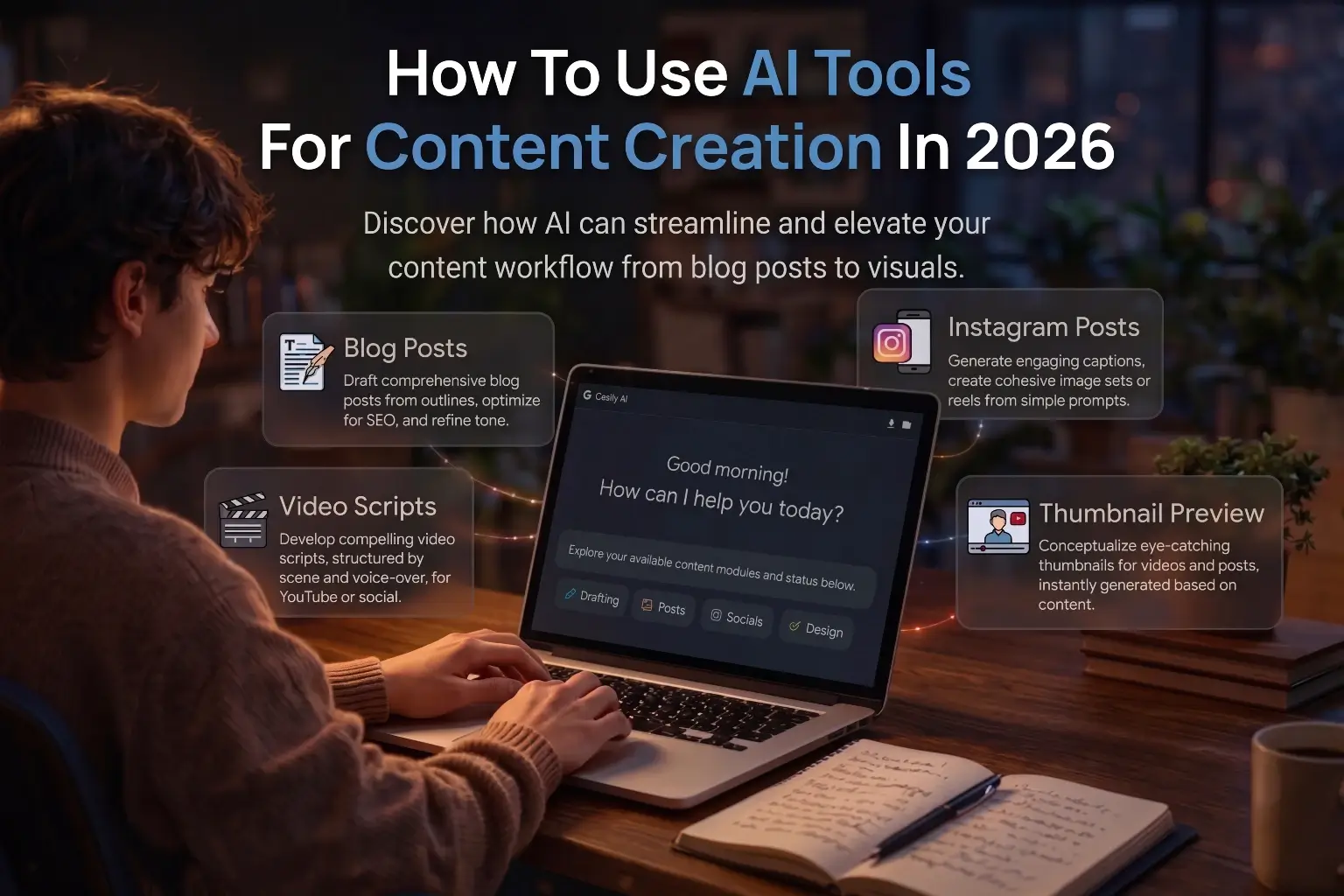
- Graphics and Carousels: Platforms like Canva have deeply integrated AI features. Tools like Canva Magic Design allow you to enter a text prompt, and the system automatically generates a multi-page carousel or presentation matching your brand colors and fonts.
- Video Generation and Editing: Short-form video is the king of content in 2026. AI video editors can take a long-form video or audio file and automatically cut it into short viral clips, add automated aesthetic captions, and remove silent pauses. This makes producing TikToks, YouTube Shorts, and Instagram Reels incredibly fast.
Best Practices for Beginners Using AI
To ensure your website and social media channels maintain high quality—especially if you want to get approved by Google AdSense—keep these three rules in mind:
- Prioritize Quality Over Quantity: Do not use AI to flood your channels with hundreds of generic, low-effort posts. Focus on creating fewer, highly valuable posts that genuinely solve a problem for your audience.
- Maintain Human Authenticity: AI cannot replace your personal experiences, unique brand story, or real-world case studies. Use AI to build the framework, but fill in the soul of the content yourself.
- Check for Fact Accuracy: AI models can sometimes hallucinate or present outdated data as fact. Always double-check any statistics, news, or technical facts generated by AI before hitting the publish button.
Conclusion
AI has democratized social media content creation, making it possible for a single individual to manage a digital presence that previously required an entire marketing team. By using AI for brainstorming, structuring scripts, and accelerating visual design, you can eliminate creative friction and stay consistent. Start experimenting with these tools today, find a workflow that fits your brand, and watch your digital community grow.